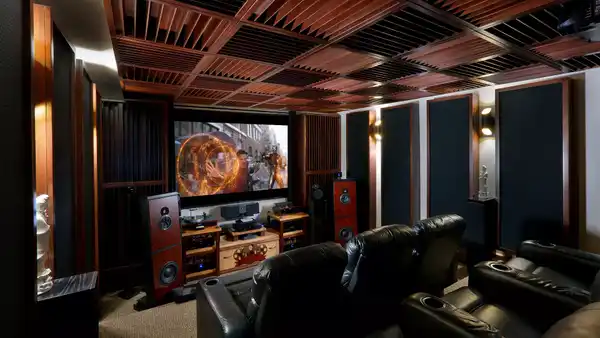
You finally hooked up that premium surround sound receiver and calibrated the tower speakers, expecting a theater-quality experience right in your living room. Instead of crisp dialogue and booming explosions, the audio bounces off the hard drywall and creates a muddy, chaotic echo. Fixing this common frustration is where acoustic panels for walls come into play. Untreated parallel surfaces and bare floors turn your expensive hardware into a jumbled mess of overlapping sound waves.
Rest assured, achieving that pristine cinematic clarity is completely within reach once you control the room acoustics. Our DescoAV technicians step in to solve these exact audio challenges every day. This guide covers why room physics matter, the clear differences between sound absorption and isolation, and the best materials to use for your specific setup.
Enhance Your Home Cinema Audio
Shop our curated selection of premium audio treatments and professional speaker systems.
Key Takeaways
- Control Reflections: Hard surfaces cause slap echo and comb filtering, which ruin audio clarity regardless of speaker quality.
- Absorption vs Isolation: Acoustic treatments control internal room sound, while soundproofing blocks noise from entering or leaving a space.
- Placement Matters: Treating first reflection points using the mirror trick provides the biggest improvement in dialogue clarity.
- Material Density: Thick, dense materials like mineral wool perform significantly better than cheap decorative foam.
Why Your High-End Speakers Sound Muddy in an Untreated Room
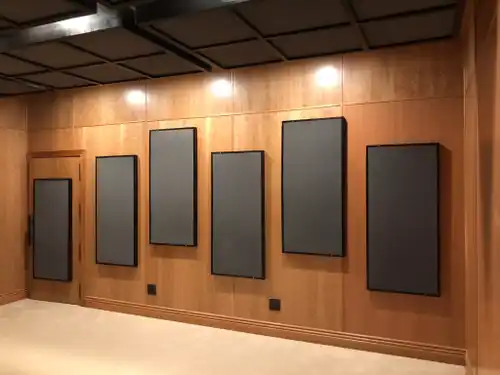
Your premium speakers push out incredible audio, but the environment completely changes what reaches your ears. Hard drywall, parallel boundaries, and bare floors act like acoustic mirrors. The sound waves bounce violently around the space. This rapid bouncing causes a phenomenon known as slap echo.
You also deal with reverberation and standing waves that build up in untreated corners. When these delayed reflections hit your ears milliseconds after the direct sound, you experience comb filtering. This ruins dialogue intelligibility and muddies high-end performance.
Room physics will always override hardware costs. Upgrading your amplifier will not fix a highly reflective room. Proper room treatments handle these early reflections to let your speakers perform accurately.
Soundproofing Versus Sound Absorption Explained for Homeowners
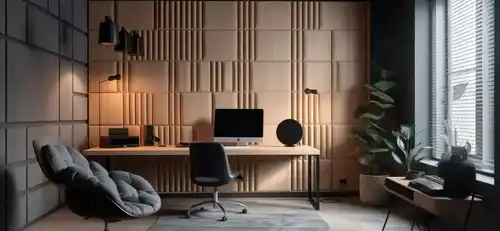
Many homeowners confuse soundproofing with sound absorption, but they achieve two completely different goals. Soundproofing focuses entirely on isolation to block noise from escaping or entering a room. You typically achieve isolation using heavy materials like mass-loaded vinyl or double-layer drywall. This process stops your home theater bass from waking up the rest of the house.
Sound absorption manages the internal reflections within the media space. Instead of dense barriers, you use materials with porous fiberglass cores to soak up stray energy. These sound absorption panels for walls trap the friction of sound waves and convert it into minor heat. Applying absorption makes your movies sound better, while isolation keeps your neighbors happy.
Finding and Treating First Reflection Points for Maximum Clarity
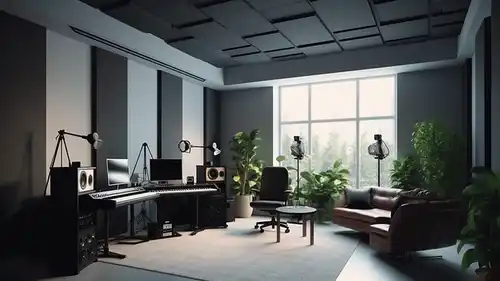
Throwing treatments randomly around the room rarely yields good results. You need a targeted approach to locate first reflection points. These are the spots on your side boundaries where audio bounces exactly once before hitting your seating area. Treating these precise areas immediately tightens up home theater acoustic treatment performance.
The Mirror Trick Technique
You can easily find these reflection points using a simple mirror trick. Sit down in your primary listening chair while a friend slides a flat mirror horizontally along the side wall. Whenever you can see the tweeter of your left or right speaker in the mirror, mark that exact spot.
Spacing and Placement Rules
Proper acoustic mapping requires following some baseline placement rules. You need to center your treatments at ear height while seated. We recommend leaving small gaps between panels to maximize edge absorption and control room acoustics for surround sound. Leaving too much bare space between treatments will allow harsh high frequencies to slip past.
Side-by-Side Breakdown of Broadband Panels, Bass Traps, and Diffusers
| Treatment Type | Primary Target Range | Best Room Placement | Cost-to-Performance Ratio |
|---|---|---|---|
| Broadband Panels | Mid to high frequencies | First reflection points | Excellent value for overall clarity |
| Bass Traps | Low frequency energy | Room corners | High cost but vital for tight bass |
| Diffusers | Upper mid to highs | Rear wall behind seating | Moderate cost to retain natural energy |
Adding room treatments transforms your listening experience, but it requires careful planning. Understanding the clear benefits and minor drawbacks helps you map out a sensible upgrade path for your media room.
Pros
Enhanced Dialogue Clarity
Absorbing early reflections stops overlapping echoes so movie vocals sound crisp and intelligible.
Tighter Bass Response
Proper low-frequency management prevents booming room modes from overpowering the subtle soundtrack details.
Predictable Audio Performance
Taking control of room physics lets you hear the exact sound profile the director originally intended.
Customizable Aesthetics
Modern acoustic wall panels for media room designs come in premium fabrics that blend into your decor.
Cons
Upfront Financial Investment
Outfitting a large media space with quality dense core materials requires a dedicated budget.
Installation Planning
Finding exact reflection points and mounting treatments safely takes careful time and specific hardware.
Material Matters: Why Density and Thickness Dictate Real Performance
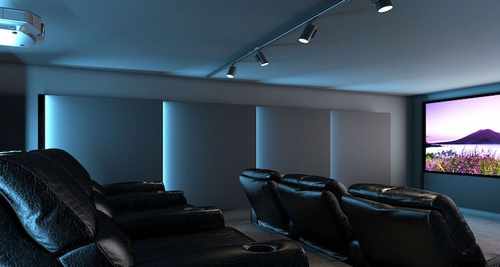
The effectiveness of any acoustic treatment relies entirely on its core material. Cheap studio foam might look the part, but it lacks the density to perform well outside of extreme high frequencies. Relying on thin decorative foam often leads to an unbalanced room that sounds unnaturally dead yet still muddy.
You achieve genuine performance using dense architectural fiberglass, rigid mineral wool, or high-density PET felt. These robust cores provide the necessary resistance to capture powerful acoustic energy.
Thickness plays a massive role in low-midrange absorption. For practical installation, always leave a two-inch air gap directly behind a four-inch thick panel to drastically increase its low-frequency absorption without buying bulkier treatments. Thicker materials pull double duty by handling complex sound dampening panels needs across a wider frequency spectrum.
Professional Design Integration and Tailored Room Optimization
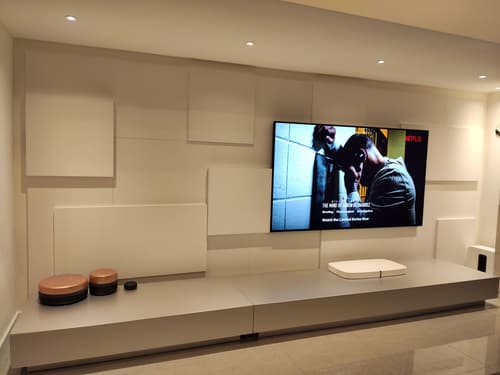
You do not have to sacrifice your interior design to achieve spectacular audio. Modern treatments integrate beautifully into luxury home theater spaces. Manufacturers offer custom fabric options that match your seating or wall color perfectly. You can even conceal acoustic panels for walls behind acoustically transparent artwork or integrate them with smart room lighting.
Generic do-it-yourself kits rarely account for your specific speaker dispersion patterns or seating layout. Professional acoustic design services manage several important factors for your setup:
- Calculating exact room dimensions for precise bass trap placement.
- Matching custom panel fabric colors perfectly to your theater seating.
- Concealing bulky treatments completely behind acoustically transparent screens.
Relying on expert guidance means your investment looks phenomenal while delivering maximum auditory impact.
Transform Your Cinematic Soundstage Using Acoustic Panels for Walls by Partnering with DescoAV
Controlling chaotic room reflections is the single most effective way to experience the true potential of your audio equipment. Investing in dense, correctly placed acoustic treatments instantly upgrades your movie-watching experience from average to extraordinary. Skip the confusing big-box stores and partner with DescoAV for all your home cinema needs. Our independent appliance and electronics experts offer personalized showroom guidance, professional installation, and outstanding local customer service to bring your dream theater to life.
Frequently Asked Questions about Acoustic Panels for Walls
You do not need to cover all four boundaries of your home theater with acoustic panels. Strategic placement at primary reflection points on the side and front boundaries yields far better results than blanketing the entire space.
Acoustic panels absorb internal room reflections to improve sound clarity, while soundproofing insulation blocks noise from entering or leaving the space entirely. You use panels to refine the listening experience and heavy insulation to isolate the structure.
You should place acoustic panels exactly at the first reflection points on your home theater side walls. Locating these specific mirror points stops the earliest and most destructive sound waves from reaching your ears.
Cheap acoustic foam panels rarely improve movie dialogue clarity because they lack the density to absorb human vocal frequencies. You need dense fiberglass or mineral wool treatments to effectively manage the midrange frequencies where dialogue sits.
An average-sized media room typically requires six to ten acoustic panels to treat the primary reflection areas effectively. Covering roughly twenty percent of your total wall surface area provides a balanced acoustic environment without making the room sound unnatural.
You can absolutely customize modern acoustic panels to match your specific home theater interior decor. Manufacturers offer thousands of acoustically transparent fabrics and printed artwork options that hide the treatment hardware completely.
Upgrade Your Home Theater Today With Desco AV
Securing the right audio gear ultimately comes down to clarity, reliable power, and road-ready durability. The integration of advanced DSP and highly efficient amplification makes modern PA systems an incredible asset for any serious performer or venue. Finding the perfect fit requires guidance from people who truly understand live sound reinforcement.
At Desco AV, our appliance and electronics experts are ready to help you navigate your professional audio options. We provide expert showroom guidance, professional installation services, and dedicated local customer service that big-box retailers simply cannot match. Visit our showroom today to experience the difference firsthand and upgrade your live sound setup with confidence.