
You drop hundreds of dollars on a blockbuster movie night, dim the lights, and hit play, only to be met with flat, tinny television speakers that completely ruin the cinematic tension. Hearing a massive on-screen explosion sound like a mild static pop drains the impact right out of a high-budget film, leaving you disconnected from the spatial awareness the director intended. Building a good surround sound system strips away that hollow audio and wraps you in the rich, directional audio that modern movies actually demand.
Fortunately, transforming your living space into a private cinema is more accessible than ever. Our audio experts have done the heavy lifting to simplify the setup process so you can focus entirely on your entertainment. This guide covers the essential hardware components you need, the physics of room acoustics, and the best channel configurations to match your specific listening environment.
Upgrade Your Home Audio
Experience cinema-quality audio right in your living room with our premium selection of home theater equipment.
Key Takeaways
- Hardware Synergy: A capable AV receiver and properly matched speakers are the foundation of immersive home theater audio components.
- Spatial Configurations: Choosing between standard setups and vertical object-based audio depends entirely on your room size and budget.
- Acoustic Treatment: Soft furnishings and strategic speaker placement dramatically reduce harsh echoes in your viewing area.
- Precise Calibration: Auto-calibration tools align timing and frequencies so sound reaches your ears in perfect harmony.
Essential Audio Hardware Components: The Building Blocks of Immersive Sound
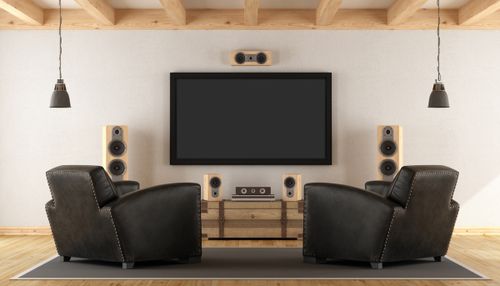
Every impressive home cinema relies on a central brain to decode and distribute audio signals. The AV receiver handles this heavy lifting, pushing power to your front, center, and surround speakers.
The AV Receiver
The home theater receiver setup acts as the command center for your entire media room. It decodes complex audio tracks and amplifies the signal to drive your speakers. High-quality receivers offer superior power and processing, which separates a basic living room setup from a high-fidelity experience.
The Speakers and Subwoofer
Your speaker array actually delivers the physical soundwaves to the room. The center channel handles dialogue, the front and surround channels handle directional effects, and the subwoofer produces deep bass impacts. When selecting these units, you must match the speaker sensitivity and impedance to your receiver to guarantee optimal performance.
Understanding Channel Configurations: Deciphering 5.1, 7.1, and Dolby Atmos

Decoding the numbers behind surround sound channel configurations helps you pick the right layout for your space. A 5.1 setup remains the standard, utilizing three front speakers, two rear surrounds, and a single subwoofer. This layout works perfectly for medium-sized living rooms where space is at a premium.
When comparing 5.1 vs 7.1 surround sound, the 7.1 system adds two additional rear speakers for an expanded soundstage. This upgrade fills larger rooms and creates a smoother transition for sound effects moving from the front of the room to the back.
Dolby Atmos explained simply is the addition of vertical audio. By using ceiling-mounted or upward-firing speakers, Atmos adds a height dimension to your viewing experience. You should choose this configuration if you want the absolute highest level of spatial immersion and have a room that can comfortably support overhead acoustics.
Mastering Room Acoustics: Optimizing Your Listening Environment
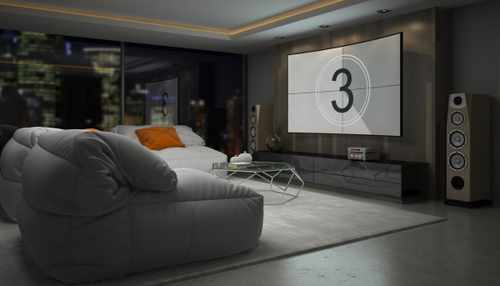
Even the most expensive hardware will sound terrible in a room with poor acoustic properties. Hardwood floors, glass windows, and bare drywall reflect sound waves aggressively, creating muddy dialogue and harsh echoes. Room acoustics for home cinema depend heavily on balancing these hard surfaces with soft materials.
You can drastically improve your audio quality by adding simple, everyday items to your space. Consider incorporating these elements into your room design:
- Heavy blackout curtains over large windows.
- A thick, plush area rug positioned between the speakers and your seating area.
- Upholstered furniture or acoustic wall panels to absorb stray soundwaves.
When researching subwoofer placement tips, always leave at least 12 to 18 inches of clearance between rear-ported speaker cabinets and your drywall to prevent distorted, booming bass buildup.
Calibration and System Integration: Fine-Tuning Your Audio for Perfection
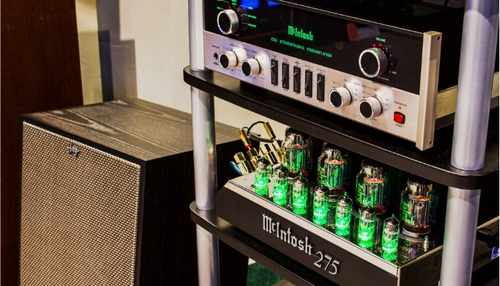
Plugging in your cables is only half the battle. To finalize your home theater calibration guide, you must properly integrate the software side of your AV receiver. Most modern receivers come with built-in room correction software, like Audyssey, to measure your room's unique acoustic signature.
This auto-calibration tool uses an included microphone to detect exactly how sound bounces around your specific seating arrangement. The software then automatically sets crossover frequencies and distance delays for each channel. This vital step guarantees that sound from speakers located at different distances hits your ears at the exact same millisecond, creating a perfectly cohesive soundstage.
Surround Sound Setup Comparison: Evaluating Audio System Options
Choosing the right equipment means finding the perfect balance for your room and listening habits. A soundbar vs discrete system debate often comes down to available space and your desired budget. The table below breaks down the main differences between these common audio paths.
| System Type | Complexity | Spatial Immersion | Upgradeability | Typical Price Range |
|---|---|---|---|---|
| Premium Soundbar | Very low plug-and-play setup. | Moderate directional audio. | Very limited to proprietary add-ons. | Budget to mid-range. |
| 5.1 Component System | Moderate wiring required. | High directional accuracy. | Fully modular for future upgrades. | Mid-range to premium. |
| 7.1 Dolby Atmos System | High technical planning required. | Maximum vertical and horizontal spatial audio. | Fully modular for future upgrades. | Premium to luxury. |
The Pros and Cons of a Good Surround Sound System
Choosing the right audio path requires balancing performance, budget, and lifestyle. While dedicated home cinema audio quality offers a massive upgrade over basic television speakers, it does require some planning. Here are the main benefits and drawbacks to consider.
Pros
Unmatched Immersion
A dedicated multi-channel layout pulls you directly into the center of the action with pinpoint directional audio.
Total Modularity
You can upgrade individual components like the subwoofer or center channel over time without replacing the entire setup.
Cinema-Grade Performance
High-quality amplifiers deliver a massive audio dynamic range that accurately reproduces both quiet whispers and loud explosions.
Long-Term Value
Premium passive speakers can last for decades because they do not rely on rapidly outdated internal digital processing.
Cons
Installation Complexity
Running speaker wire across a room and configuring an AV receiver requires time and technical patience.
Spatial Footprint
Multiple speaker cabinets and a large subwoofer command a significant amount of physical floor space in your living room.
Achieving the Ultimate Audio Experience: Next Steps to Improve Your Home Cinema
Investing in a good surround sound system directly translates to the longevity and enjoyment of your home entertainment space. High-fidelity audio transforms ordinary movie nights into breathtaking experiences that you can actually feel. At Desco AV, we are ready to help you navigate complex component compatibility and build the perfect layout for your home. Visit our local showroom today for a personalized audio demonstration and ask about our professional installation services.
Frequently Asked Questions About A Good Surround Sound System
A 5.1 layout uses five primary speakers and one subwoofer, while a 7.1 layout adds two extra rear channels. These additional rear speakers provide smoother panning effects for sound moving behind the listener.
Yes, your room dimensions directly influence bass response and sound reflection. Large, open spaces require more powerful amplifiers and larger subwoofers to pressurize the air properly.
Wired setups generally offer better reliability and support higher bandwidth lossless audio formats than standard wireless alternatives. However, premium wireless systems are rapidly closing the gap for casual viewers who want to avoid running cables across the floor.
You should generally allocate roughly double your receiver budget toward your total speaker package. Speakers have the largest physical impact on the final sound, while the receiver acts as the supporting engine.
Dolby Atmos is not strictly required for excellent audio, but it adds an incredible layer of vertical immersion for modern movies. A well-placed 5.1 layout will still drastically outperform any standard television or soundbar.
The center channel speaker is the most vital piece of hardware because it handles nearly all dialogue and on-screen action. Without a highly capable center channel, voices get completely lost under heavy background effects.
Why Trust Desco AV?
When you choose Desco AV, you're placing your trust in a family-owned legacy spanning over 50 years, where our mission to deliver exceptional audio-video experiences through innovative design and unwavering personal service guides every project, from custom smart homes to commercial integrations. Rooted in Olympia, WA, we've earned our reputation by evolving with technology while honoring the human connections that started it all: founders Dick Scott and Gene DeRousie built Desco on passion and quality in 1969, Jeffrey Scott expanded it with charismatic expertise and lifelong customer bonds, and now third-generation leader Marie Di Scala upholds that tradition with forward-thinking vision. Our core values, craftsmanship in every installation, reliability you can count on, and genuine relationships that feel like family, ensure we don't just meet expectations; we exceed them, making every space in the South Sound and feel truly exceptional, because your trust is what we've built our home on.